Why Your Washing Machine Smells, and How to Stop It

A washing machine that produces musty-smelling laundry is not dirty in the ordinary sense. It has developed a biofilm – a layer of bacteria, detergent residue and body oils coating the drum outer, the seal and the internal hoses. Understanding that changes the fix from scrubbing to something more systematic.
This guide covers why modern machines are more prone to it and the routine that clears it.
Maximum wash temperatures and maintenance programmes differ between machines, and the Hotpoint washing machine manuals will tell you what yours supports.
Why it is more common now
Three trends combine:
Low-temperature washing. Programmes at 20 or 30 degrees save energy and do not reach temperatures that control bacterial growth.
Liquid detergents, which contain no bleaching agents. Powder detergents with oxygen bleach suppress biofilm; liquids do not.
Front-loading designs with a rubber door seal that traps water in its folds, plus doors kept closed between washes.
None of these is a fault. They are consequences of efficiency and convenience, and they simply shift some maintenance onto the user.
Where the smell lives
The door seal folds, which hold water and lint.
The detergent drawer and its housing, where residue and mould accumulate.
The drain pump filter, which traps debris and stagnant water.
The outer drum and internal hoses, which you cannot reach directly.
That last one is why surface cleaning alone rarely works for long. The reservoir of biofilm is inside the machine.
The clearing routine
Step 1: clean the door seal
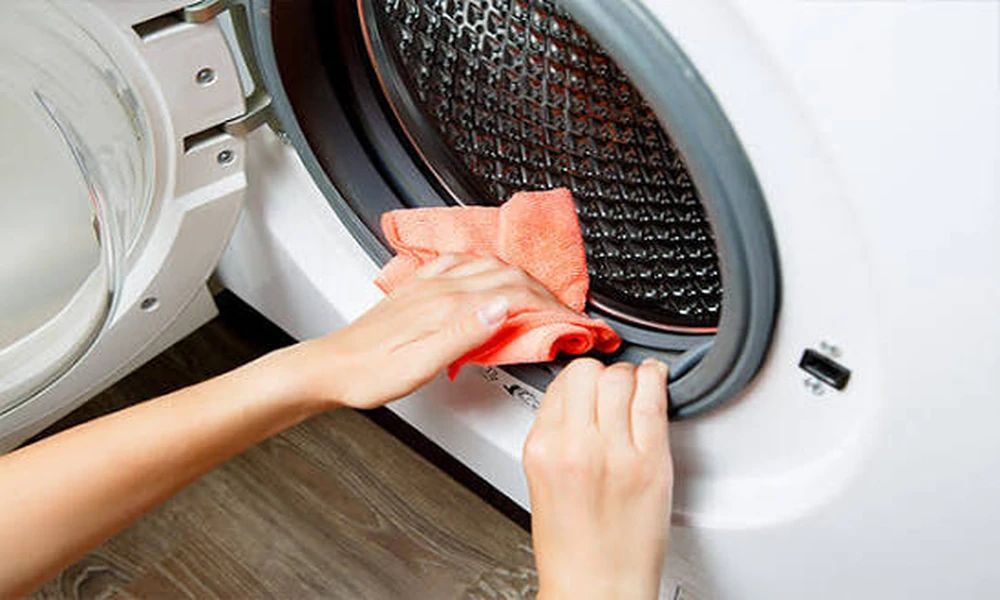
Pull the folds of the rubber seal open and wipe out every part with a cloth and a suitable cleaner. Expect to find black deposits and trapped debris. This is the most visible source and the one most people stop at.
Step 2: clean the drawer
Remove the detergent drawer completely – most release with a catch. Wash it and scrub the recess it sits in, including the roof of the cavity where residue hangs down. A small brush helps.
Step 3: clean the pump filter
Behind the small access panel at the front bottom. Place a tray and towels first; there is more water behind it than expected. Clean the filter and wipe inside the housing.
Step 4: run a maintenance wash
Empty machine, hottest available programme, using either a proprietary washing machine cleaner or a dose of oxygen-bleach powder detergent. This is what addresses the parts you cannot reach.
Heavily affected machines may need two or three of these on consecutive days before the smell clears fully.
Keeping it clear
Leave the door and detergent drawer ajar between washes. This alone prevents most recurrence.
Run a hot maintenance wash monthly.
Use powder detergent with oxygen bleach for at least some of your washes, particularly whites.
Wipe the seal dry after the last wash of the day.
Remove laundry promptly rather than leaving it in the drum.
Clean the pump filter every month or two.
Drain hose loop heights are specified per model, which matters here – browse manuals by brand to confirm the figure for your installation.
Detergent dosing
Over-dosing is a major contributor. Excess detergent does not rinse away fully and becomes food for the biofilm. Dose for your actual load size and water hardness rather than filling the cap by habit.
Fabric softener is a particular offender – it leaves a waxy residue in the drawer and drum. If odour is a persistent problem, stopping softener for a while is worth testing.
If the smell persists
A smell that survives a thorough clean and several maintenance washes may indicate:
A drain hose problem allowing sewer gas back into the machine. Check the hose has the required high loop and is not pushed too far into the waste connection.
Standing water from a partial drainage restriction.
A blocked or collapsed sump hose holding debris.
The drain hose issue is worth checking carefully, because it produces a different smell – sulphurous rather than musty – and no amount of drum cleaning will address it.
Frequently asked questions
Does vinegar work?
It has some effect but is weaker than oxygen bleach against biofilm, and repeated use is not recommended for rubber seals and hoses.
Can I just always wash hot?
Effective but energy-intensive. A monthly hot maintenance wash achieves most of the benefit.
Is the black stuff on the seal mould?
Generally mould and biofilm together. Badly degraded seals with mould growing into the rubber may need replacing.
Note: disconnect the appliance from the mains before accessing the pump filter. Maximum temperatures, cleaning products and maintenance programmes vary by model – check what your machine supports.