Bitcoin Poker: The Quiet Revolution That Changed How the World Plays Cards
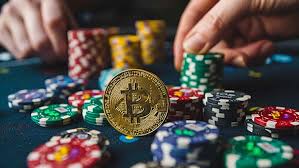

Nobody scheduled a meeting to decide that bitcoin poker would become one of the most successful real-world applications of cryptocurrency payments. There was no product launch, no marketing blitz, no industry consortium convened to establish standards and best practices. The whole thing happened organically, incrementally, and almost entirely below the radar of the financial press, driven by nothing more sophisticated than players discovering that paying with bitcoin was a dramatically better experience than the alternative and telling their friends.
That grassroots quality is actually what makes the bitcoin poker story worth telling carefully. Most successful technology adoption narratives involve a recognisable catalyst: a device launch, a platform opening, a regulatory change that unlocks a previously closed market. Bitcoin poker has none of those dramatic turning points in its history. It has something rarer and more durable: a decade of consistent, compounding preference driven by genuine utility. Players tried it, it worked, and they kept using it. Then more players tried it, it worked for them too, and the base kept growing.
The problem that bitcoin poker was solving had been present in online gaming almost since the industry began. Moving money across international borders through conventional banking infrastructure is, in the politest possible terms, an unsatisfying experience for online poker players. Banks have historically treated gaming transactions with a suspicion that borders on hostility, declining deposits without explanation, flagging withdrawals for review, and applying processing times that seem designed for an era of physical ledgers and postal correspondence rather than a digital entertainment industry operating in real time across dozens of jurisdictions simultaneously.
The practical consequences for players were significant enough to shape behaviour. Recreational players who might otherwise have enjoyed online poker occasionally found the payment experience discouraging enough to simply not bother. Serious players who depended on being able to move funds efficiently found themselves constructing elaborate workarounds involving multiple payment methods, multiple accounts, and a frustrating amount of administrative overhead that had nothing to do with actually playing poker. The game itself was fine. The plumbing was the problem.
Bitcoin fixed the plumbing. A deposit made in Bitcoin does not require a bank’s approval or a payment processor’s blessing. It does not trigger fraud detection algorithms calibrated for a different risk profile entirely. It does not know or care about the jurisdictional relationship between the player’s country of residence and the platform’s country of operation. It moves from wallet to account with a speed and directness that feels almost startling the first time a player experiences it after years of navigating conventional payment friction.
Withdrawals told the same story from the other direction. Cashing out winnings through traditional banking could involve waiting periods measured in business days, processing fees extracted at multiple points along the correspondent banking chain, and the occasional inexplicable hold that turned a straightforward transaction into a support ticket. Bitcoin withdrawals process according to network conditions rather than institutional schedules, and the money arrives in a wallet that belongs entirely to the player rather than sitting in transit through a series of intermediaries with their own operational timelines.
The security dimension added another layer of appeal that is easy to underestimate. Funding a poker account with bitcoin means the player is not handing card details or banking credentials to a third party. The transaction is discrete, self-contained, and leaves no trail of sensitive financial information in the platform’s systems that could become a liability in the event of a data breach. For players who had grown up with an awareness of online security risks, that quality was not a minor footnote. It was a genuinely significant advantage.
The experience improvements compounded over time as wallets became more user-friendly, transaction costs on various networks decreased, and the basic familiarity of handling digital assets spread through the player population. Early bitcoin poker adopters had to navigate a learning curve that, while manageable, required genuine effort. Players coming to crypto payments today find a far more accessible experience, which has accelerated adoption among demographics that might previously have found the technical barrier prohibitive.
What has emerged over the course of a decade is a payment ecosystem that fits online poker with a precision that conventional banking never achieved. The game is global, borderless, and operates continuously without regard for banking hours or national holidays. Bitcoin shares all of those characteristics in a way that wire transfers and card payments simply do not. The alignment is not coincidental. It reflects a genuine structural compatibility between what cryptocurrency payments offer and what online poker specifically requires.
The players figured that out through experience rather than analysis, which is typically how the most durable shifts in consumer behaviour begin. Bitcoin poker did not win on the strength of a compelling pitch. It won because it delivered, consistently and repeatedly, across millions of transactions involving real money and real players who had every incentive to notice when something was not working.
The quiet revolution turned out to be one of the most effective demonstrations of practical cryptocurrency utility anywhere in the consumer economy. It just happened at the poker table, where the players were already accustomed to making good decisions under uncertainty.